

A question we hear often is, “Does my child have a speech delay or are they just a late talker?” And that’s a great question! Speech development is one of the most common concerns families have during the toddler and preschool years and it can sometimes be hard to know what the root cause is.
Maybe your child understands everything you say but isn’t using many words yet. Maybe they point, gesture, and communicate in other ways, but their speech hasn’t quite taken off. Or maybe you’re hearing from caregivers, grandparents, or teachers that your child seems behind compared to peers.
So let’s break down the difference between a speech delay and a child being a late talker, look at a few indicative signs to watch for, and get into why being proactive with speech therapy can make a meaningful difference!
What Is a “Late Talker”?
A late talker is typically a toddler (often between 18–30 months) who has delayed expressive language, meaning fewer spoken words than expected, but they show typical development in other areas.
In simpler terms: A late talker understands language but is slower to begin using spoken words.
Common characteristics of a late talker include:
- Strong understanding of language
- Follows simple directions
- Uses gestures such as pointing, waving, or nodding
- Engages socially with adults and peers
- Uses sounds, babbling, or word approximations
- Demonstrates appropriate play skills
What Is a Speech or Language Delay?
A speech or language delay is present when a child’s communication skills are developing more slowly than expected for their age and impacting their ability to successfully communicate and move through their day.
This may affect:
- Expressive language (spoken words)
- Receptive language (understanding)
- Speech sound development
- Social communication
An important thing to remember is that a speech delay does not mean something is “wrong” with your child, it just points to areas where they need additional support to develop skills at a typical pace.
Signs of a speech or language delay may include:
- Limited understanding of spoken language
- Few or no words for age
- Difficulty imitating sounds or words
- Reduced use of gestures
- Limited joint attention or social engagement
- Frustration due to difficulty communicating
Speech and language delays can impact how children express needs, interact with others, and participate in daily routines, especially as communication demands increase with age, social interactions and schooling.
Speech Delay vs. Late Talker: What’s the Difference?
While these terms are often used interchangeably, they are not the same. Here’s a quick look at the differences between the two.
Late Talker
- Understands language well
- Uses gestures to communicate
- Engages socially
- Primary concern is spoken words
- Other developmental skills appear typical
Speech or Language Delay
- May struggle with understanding language
- Limited gestures or imitation
- Communication affects daily interaction
- May show frustration or withdrawal
- Skills are developing more slowly overall
The key takeaway here is that the difference between the two isn’t always obvious without an evaluation. Don’t hesitate to reach out to a speech-language therapist if you’re not sure where your child falls.
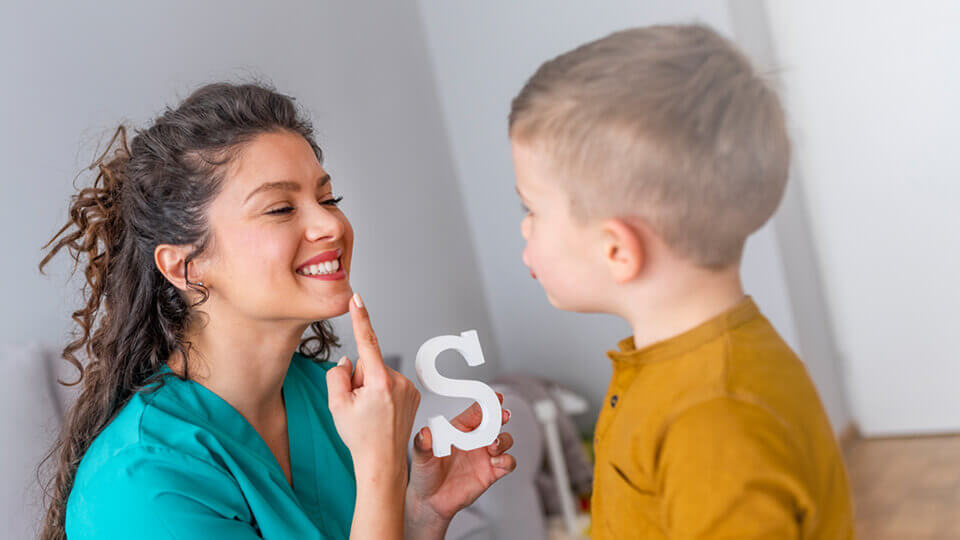
Speech Delay Signs to Watch For & Why Being Proactive Matters
Another important piece of speech and language development is that it varies from child to child. This is also why early detection and evaluation are so important – it gives you the most accurate information for your child.
However, there are some signs that you can watch for that indicate there may be a speech delta going on and that your child would benefit from an evaluation.
Common speech delay signs include:
- No babbling by 9 months
- No words by 15–18 months
- Fewer than 50 words by age 2
- Not combining words by age 2.5–3
- Difficulty following simple directions
- Limited eye contact or interaction
- Rare imitation of sounds or words
- Frequent frustration or tantrums related to communication
- Loss of previously used words
One of these signs alone does not automatically mean a speech delay but if you’re seeing multiple signs over time, an evaluation may give you more insight into where your child’s communication challenges lie.
Many parents worry that seeking speech therapy too early means overreacting but early support is one of the most helpful things you can do for your child’s speech development!
Early intervention works because:
- Young brains are highly adaptable
- Skills are easier to build early
- Progress typically happens more quick
- Therapy often requires fewer sessions
- Frustration is reduced
- Confidence grows sooner
Early intervention and therapy focuses on strengthening foundational communication skills before gaps widen.
Waiting does not provide clarity but evaluation does.
Being proactive does not mean something is “wrong.” It simply means you’re gathering information to make informed decisions.
Why a Speech Evaluation Is Helpful (Even If You’re Unsure)
A speech evaluation is not a commitment to therapy. It’s simply a way to better understand the speech challenges that your child is specifically facing and understand the ways you can support them.
A speech language evaluation provides:
- Objective data about your child’s skills
- A comparison to developmental expectations
- Identification of strengths and challenges
- Guidance on whether monitoring or therapy is recommended
An evaluation can also tell you if your child is within typical range, if they are a late talker who should be monitored or if speech therapy would be beneficial at that time.
Parents often tell us that evaluations provide peace of mind around their child’s development, whether therapy is recommended or not.
What If You’re Not Ready for a Full Evaluation?
Not every family feels ready to jump into a full evaluation and that’s okay!
At Beyond Speech Therapy Specialists, we offer free speech screenings for families who want professional guidance without pressure.
A screening can help:
- Determine if skills appear on track
- Identify whether further evaluation is recommended
- Provide reassurance or direction for next steps
Screenings are a great option if you’re unsure, have mild concerns, or simply want expert input. Reach out to us today!
Whether your child is a late talker, experiencing a speech delay, or simply developing at their own pace, having clear information helps you move forward with confidence!
If you have concerns about your child’s speech or language development, the team atBeyond Speech Therapy Specialists is here to help! We offer comprehensive evaluations, free screenings, and individualized in-home therapy to guide families every step of the way.