
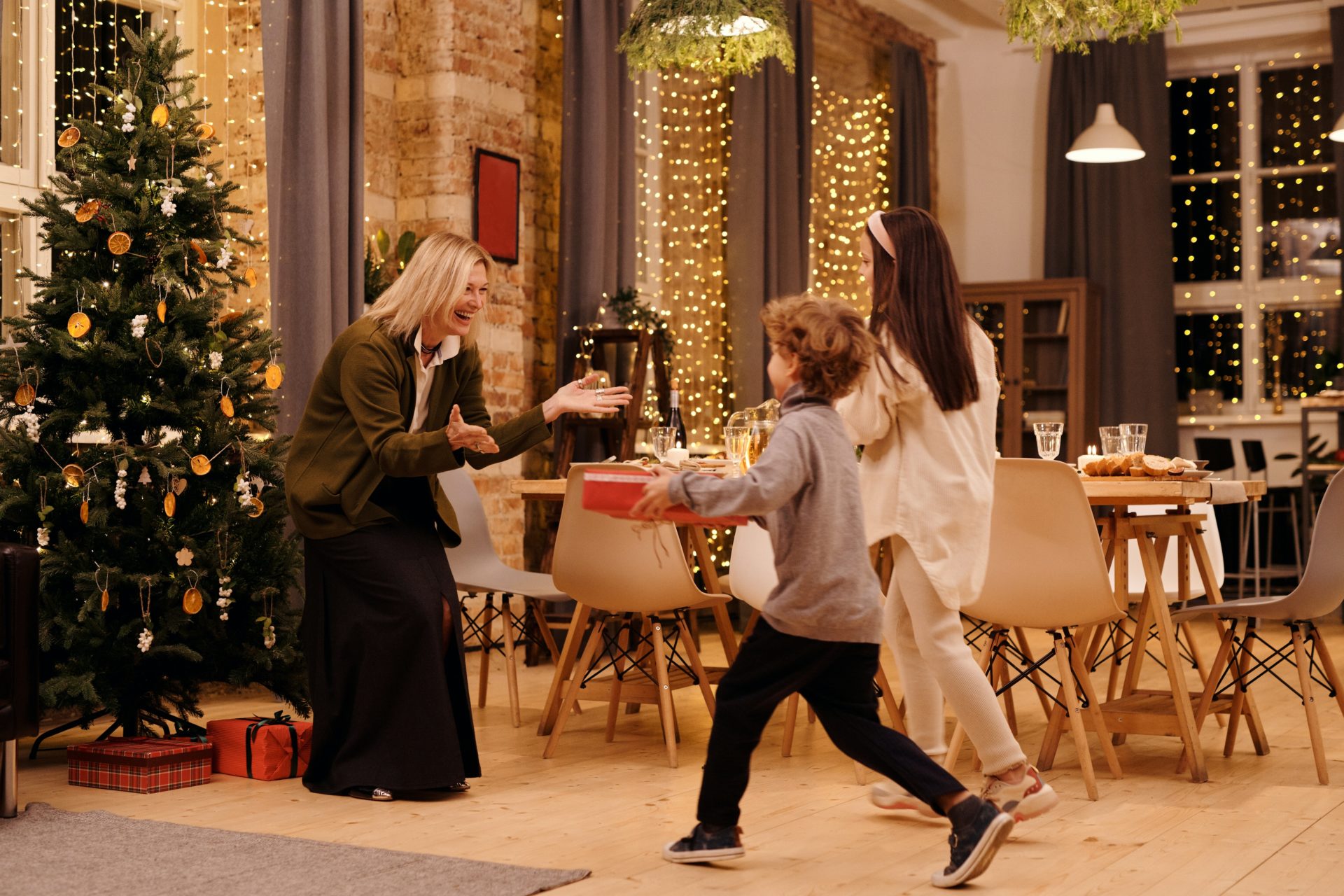
Why the Holidays Can Be Hard for Sensory Kids
The holidays are full of wonderful things – parties, favorite foods, family traditions. And while this is so exciting for our kids, many children can struggle with the disruption of routine and the sensory input of it all..
A child’s sensory system takes in information from sight, sound, touch, smell, taste, and movement and it also tells them where their body is in the physical space around them. When a child is sensitive to these inputs, a single busy day can add up quickly and the holidays tend to stack several challenges together.
Common sensory challenges for kids:
- Noise: Crowded houses, music, laughter, doorbells, and kitchen appliances can all be loud at once.
- Busy environments: Lots of people moving around and talking can be hard to filter out.
- Unfamiliar smells and foods: Holiday cooking brings strong smells and new dishes, often served in unpredictable ways.
- Changed clothing: New outfits & new fabric, scratchy tights, stiff collars, and tags can be uncomfortable.
- Lights and visual clutter: Flashing decorations and bright displays can be overwhelming.
- Disrupted routines: Late nights, skipped naps, and different schedules make it harder for a child to stay regulated.
- Physical touch: Hugs, kisses, and cheek pinches from relatives may come with little warning.
Your child is not being difficult when they struggle with these things, it’s just their nervous system working overtime to make sense of a very busy few weeks.
Signs Your Child Is Sensory Overloaded
Every child shows stress differently. Some common signs include:
- Covering ears, squinting, or pulling away from people
- Getting silly, wild, or hyper without the ability to calm down
- Crying, yelling, or melting down over small things
- Refusing to eat or sit at the table
- Hiding under a table or in another room
- Seeming “checked out” or unusually quiet
- Repeatedly asking to leave or go home
When you notice these signs, it usually means your child needs a break, a quieter space, or a little more support to navigate what’s happening around them.

Simple Ways to Help Your Child Regulate During The Holidays
1. Plan Ahead
Preparation makes a big difference when it comes to sensory regulation. Try these steps before any holiday event:
- Preview the day. Talk through who will be there, where you’re going, and roughly how long you’ll stay. A simple visual schedule can help younger children.
- Plan an exit. Decide ahead of time when you’ll take a break or, if necessary, leave. Let your child know that they can ask for a break and if they need to leave, that is ok, too.
- Prepare for food, if necessary. Ask whether a familiar food can be served or bring one along. Let your child know they don’t have to eat anything new.
- Choose comfortable clothes. Let your child practice wearing their outfit before the event or give them acceptable options to choose from. Cut out scratchy tags and choose soft fabrics when you can.
2. Create a Calm Space
Many families find it helpful to set up a quiet retreat, even in a relative’s home, where their child can go for needed breaks. This could be a bedroom, a corner with pillows, or a spot away from the main gathering space.
You can also consider bringing comfort and support items:
- Noise-reducing headphones
- A favorite blanket or stuffed animal
- A book, tablet with headphones, or simple quiet activity
- A small snack they already enjoy
Let your child know they can visit this space whenever they need to.
3. Use Movement and Heavy Work
Activities that give the body deep pressure and movement, often called “heavy work,” can help many children feel calmer and more organized.
Simple heavy work activities to try:
- Carrying gift bags, laundry baskets, or a small box of holiday decorations
- Pushing against a wall or doing wall push-ups
- Helping with sweeping, wiping tables, or setting out plates
- Animal walks, such as bear crawls or crab walks, during a break
- Squeezing a stress ball or playing with putty before a busy part of the day
4. Keep Routines as Steady as Possible
It’s normal for everyday routines to be disrupted during the holidays, but keeping a few things regular and ‘normal’ can help sensory sensitive kids better navigate the busier times.
- Keep bedtime and wake-up times close to normal.
- Protect at least one quiet part of the day, such as a short rest or a calm activity before dinner.
- Keep regular meals and snacks so hunger doesn’t add stress.
- Build in movement breaks between activities.
5. Talk With Relatives Before the Event
For a lot of families, there can be added pressure from family members around the sensory needs of our kids. Clear and simple communication beforehand that gives me a heads up about what your child might need can make everyone a bit more comfortable.
You might say:
- “Ryan does best when hugs are offered rather than given, so a high five or wave works great.”
- “We’re keeping the food simple this year, so he may only eat a few things, and that’s okay.”
- “If he needs a quiet break, we’ll step away. Please don’t worry if he leaves the room.”
Giving relatives a clear, kind script makes it easier for everyone to support your child.
When Extra Sensory Support Can Help
Some kids might need more than planning and calm spaces to help regulate and that’s ok! If you’re noticing behaviors that aren’t being managed by simple sensory adjustments, consider reaching out to an occupational therapist for more support.
Things like your child:
- Having frequent meltdowns that don’t ease with breaks or support
- Struggling with clothing, grooming, or eating most days, not only during the holidays
- Avoiding most sensory experiences or seeks intense input in ways that concern you
- Having a hard time settling down to sleep or staying regulated during daily routines
At Beyond Speech Therapy Services, our occupational therapists work with children and families in their homes throughout Chicago’s southwest and west suburbs. Therapy is built around your child’s sensory needs and your family’s real-life routines, and parents receive doable strategies they can use right away.
Enjoying A Happy Sensory Holiday!
The holidays are about celebration, friends and family, and the excitement of the season! Remember that enjoying this time of year looks different for different people and for kids with sensory needs, an enjoyable holiday might look like a shorter visit with family, a quiet break that helps them calm down, or one new tradition that feels good to everyone.
Each time you navigate a situation where your child is successfully able to regulate, celebrate those wins! Helping a sensory child through the holidays takes patience, and you are already doing important work by paying attention to what your child needs.
If you have questions about your child’s sensory needs, contact Beyond Speech to talk through your concerns. We’re glad to help your family find a holiday season that feels calmer and more joyful!