
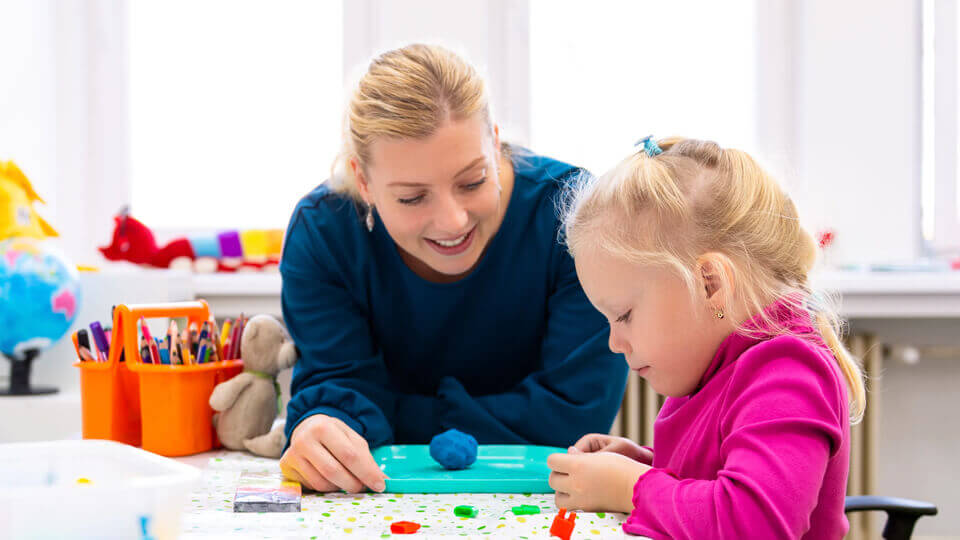
Play therapy is a therapeutic approach that utilizes play as the primary way to help children develop communication skills, learn emotional regulation, build motor skills, social skills, and problem-solving abilities. Play therapy is an additional, or an alternative, model instead of relying on direct instruction alone. Pediatric therapists use carefully chosen and specific play activities to target the goals of each child they work with.
At Beyond Speech Therapy Specialists, we believe in ‘playing with a purpose’. For children, play is their natural language, their natural state. So when we incorporate play into therapy sessions, skill building that might feel like “hard work” becomes play time!
In a play-based therapy session:
- The therapist selects activities with a specific purpose in mind
- Skills are practiced repeatedly in a low-pressure environment
- The therapist adjusts the activity in real time to support progress
- Children are better engaged and enjoying the time, making all that work just fun!
Play is the tool used in therapy, not the focus of the session. Every game, toy, or activity is chosen intentionally to support a child’s individual needs.
Why Play Therapy Is So Effective
Play therapy isn’t just popular, it’s well supported by research. Decades of studies show that children learn best when they are actively engaged, emotionally regulated, and motivated. Play naturally creates all three of these conditions.
Research has shown that play-based therapy:
- Increases a child’s engagement and attention during therapy sessions
- Supports faster learning and better retention of new skills
- Improves emotional regulation and flexibility
- Helps skills carry over more easily into everyday life
When children are relaxed and enjoying themselves – a natural by product of play – their brains are more open to learning. Play reduces stress and pressure, allowing children to take risks, make mistakes, and try again, which is an essential part of their development.
This is especially important for young children and children with developmental delays, sensory differences, or communication challenges. Play-based therapy meets children at their developmental level and builds skills in a way that feels achievable and successful for them.
What Play Therapy Actually Looks Like
Because play therapy looks different from traditional “sit and practice” learning, it can be helpful to understand what’s really happening during a session.
Speech & Language Therapy
During speech therapy sessions, play may include things like pretending, board games, and interactive toys.
And while it looks like fun and the kids are having a ball, the therapist is actually working on:
- Vocabulary development
- Sentence building and expressive language
- Following directions
- Turn-taking and conversational skills
- Speech sound practice
For example, a pretend kitchen game might target requesting (“I want the apple”), describing (“big red apple”), and sequencing (“first cook, then eat”).
Occupational Therapy
In an occupational therapy session, play might involve puzzles, sensory activities, crafts, or movement-based games.
These activities help children target:
- Fine motor skills and hand strength
- Sensory regulation and attention
- Motor planning and coordination
- Independence with daily tasks
Sensory-based play helps children feel calm and organized so they can focus and participate more fully in daily life.
Physical Therapy
Physical therapy often looks the most like playtime! Climbing, jumping, balancing, or navigating obstacle courses are all part of the gross motor focus of PT sessions.
These playful activities target:
- Strength and endurance
- Balance and coordination
- Gross motor skills
- Confidence with movement
Children are often more willing to practice challenging movements when they’re part of a game or favorite physical activity.
Social-Emotional Support
In a social work session, children are usually working through some big, hard feelings and play therapy helps take the edge off tough topics.
In SEL, play is used to help children:
- Identify and express emotions
- Practice coping strategies
- Build flexibility and frustration tolerance
- Learn social skills in a safe environment
Through play, children can rehearse real-life situations, learn from mistakes, and build confidence without fear of failure.
A Family’s Role in Play Therapy
Parents, families and caregivers are a very important part of play-based therapy.
Your involvement, observations, and follow-through at home all play a huge role in your child’s progress. At the same time, it’s completely normal to wonder what makes therapy different from simply playing with your child at home. So let’s talk about it!
“It looks like the therapist is just playing with my child—can’t I do that?”
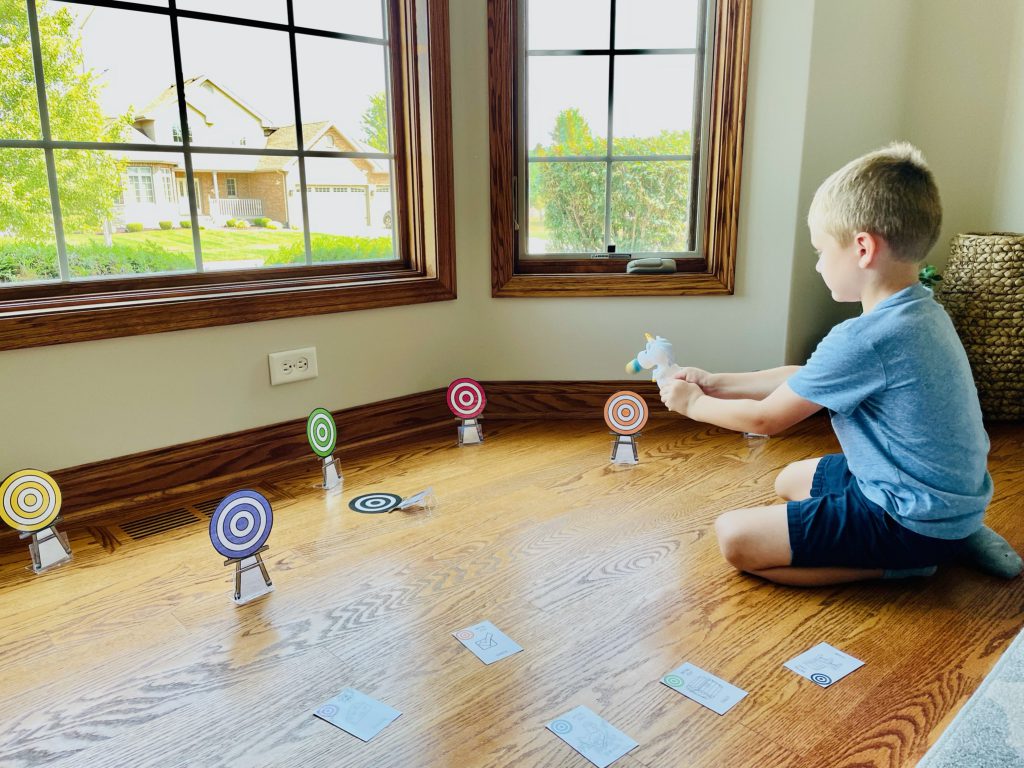
Playing with your child at home is an important and valuable part of family life and something we always encourage! The difference in at-home play and play therapy lies in the intention, clinical decision-making, and specific data collection behind the play.
Pediatric therapists are specially trained to:
- Identify specific developmental gaps or challenges
- Choose play activities that target those exact skills
- Adjust the activity in real time based on how your child responds
- Provide just enough support to challenge growth without overwhelming your child
What may look like simple play is actually carefully structured practice. A therapist might be targeting language, emotional regulation, motor planning, or attention—all within a single activity.
The goal is always to help your child build skills in a way that feels safe, motivating, and achievable.
So the family’s role at home isn’t to replicate therapy, it’s to continue offering playful, supportive interactions that reinforce those skills naturally in between therapy sessions.
“Can you just tell me what to do?”
This is another very common and understandable question. Parents want to help, and it’s natural to look for clear instructions on how you can support your child.
Many skills children are working on – communication, regulation, motor coordination, or social interaction – can’t be learned through explanation alone. They require practice in the moment, with support and guidance that adapts to the child’s needs.
In play-based therapy, therapists:
- Model strategies during play
- Coach children through challenges as they arise
- Adjust expectations based on your child’s regulation and readiness
- Help children experience success before increasing difficulty
That said, caregiver education is always an important part of Beyond Speech therapy sessions.
Our therapists regularly check-in with parents and caregivers to share:
- What skills are being targeted
- Why certain activities are being used
- Simple, realistic ways to support development at home
How Families Support Success in Play-Based Therapy
The most successful therapy outcomes happen when families and therapists work together. When parents understand the “why” behind play-based therapy, they can feel more confident and connected to the process and how to support their child’s goals between sessions.
Families support therapy success by:
- Engaging in playful interactions without pressure
- Offering opportunities for practice in everyday routines
- Observing and celebrating progress, even when it’s gradual
- Asking questions and staying curious about their child’s development
Play therapy may look simple on the surface, but at its core, it’s a powerful, evidence-based approach designed to help children build meaningful and necessary skills in a way that feels natural, motivating, and fun!.
Through intentional, therapist-guided play, children learn to communicate, regulate emotions, strengthen motor skills, and gain confidence, and often they don’t even realize they are actually “working”!.
If you have questions about your child’s development or wonder whether play-based therapy could be helpful, our team at Beyond Speech Therapy Specialists is here to support you.
We offer comprehensive evaluations and individualized private, in-home therapy services designed to meet your child where they are.
Reach out today to connect with one of our wonderful therapists and take the next step in supporting your child’s growth and development. And we can’t wait to do the same!